

Finding the Gold:
A Reflection on The Outsiders

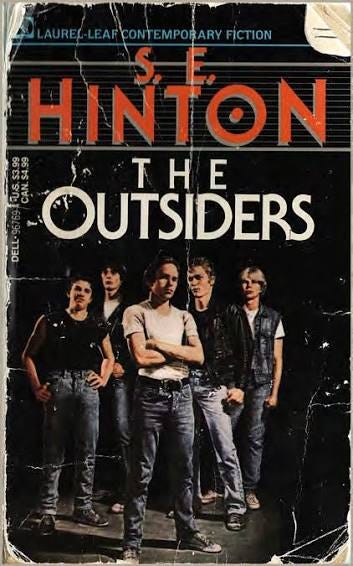
I was in a professional development session today, and we reflected on the text The Outsiders. I hadn’t read it before, but when I got to the excerpt, I realized this story isn’t just important to me. It’s important to students all over the world.
The socioeconomic undertones of the story encapsulate the experience some of our students live daily. Not to mention the adverse childhood experiences that haunt them long after the moment has passed. The story of children coming of age and navigating two worlds brought two types of teachers to mind: the ones who serve those exact students: the superhero teacher and the energized educator.
The Superhero Teacher
The superhero teacher tries to carry the weight of the child’s world and often burns out because of it. They fall victim to the student’s circumstance, feeling sorry for how the child shows up, good or bad. They internalize the belief that everything that happens to that child begins and ends with their instruction and influence.
That way of showing up is actually detrimental to students, because teaching was never about the teacher. It’s about the students. Unfortunately, big urban systems indoctrinate teachers into a model that puts most of the responsibility on the teacher and not enough on the student to navigate complex ideas for themselves. Chapter 3 of my book, Teach the Curriculum, breaks this down and extends the idea further: when students learn how to navigate challenges through instruction, they’re better equipped to handle life’s challenges too.
The Energized Educator
The energized educator is one who shares the energy of transformation. I’m no science wiz, but the little science I know tells me energy is never lost, only transferred. That’s the meaning behind the name.
I don’t seek to do this work alone. I seek to impact, uplift, and uproot teachers into the belief that every child is capable of learning. The energized educator sees that in the work and acts on it. They see the students they serve for who they truly are, and they push them past basic instructional rigor into critical thinking, because they know that in order for our students to get free, they have to think, read, and lead. I talk about this in Teach the Curriculum as well, if you want to go deeper.
Nothing Gold Can Stay
A poem was shared in the session that’s stayed with me since:
Nature’s first green is gold, Her hardest hue to hold. Her early leaf’s a flower; But only so an hour. Then leaf subsides to leaf. So Eden sank to grief, So dawn goes down to day. Nothing gold can stay.
— Robert Frost, “Nothing Gold Can Stay”
I asked a friend what he thought it meant, and his answer was spot on: “Everything in life has a life cycle. Nothing lasts forever. You find the beauty in each stage of that cycle, even as it shifts and changes.”
So I’ll leave you with this question: do we still find beauty in teaching, or have we been cast as outsiders because we’ve lost the urge to become energized educators? Gold, in this sense, is good instruction. And the question of why gold, why good instruction, can’t stay... that’s one I dig into in Teach the Curriculum.