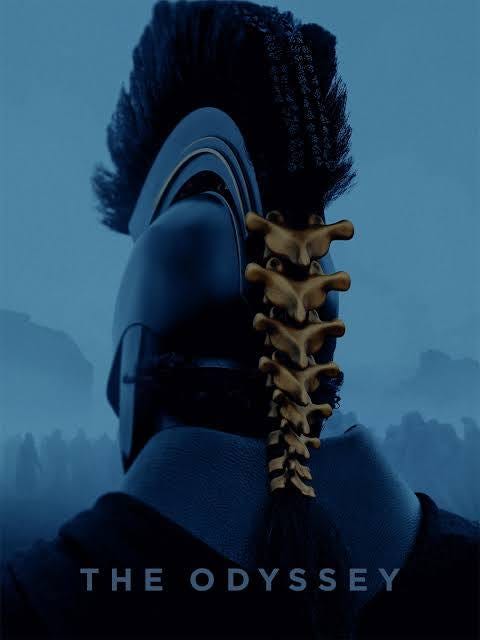
The Odyssey
The Leadership Lesson Underneath It

Yesterday I had the privilege of seeing the new movie adaptation of The Odyssey, a book I first read in school and have gone back to more than once as a coach and a CEO looking for lessons hiding in plain sight. In the story, a leader dreams the impossible dream: outsmart men, win the favor of gods, and find his way home. He leaves with a fleet of ships and hundreds of men. He returns with nothing but his own strategic mind and an unwavering devotion to the goal in front of him.
Watching it again as an adult, I couldn’t stop thinking about what this means for the work we do every day with students, and how much of it is already baked into the T.E.A.C.H. Framework.
The Strategy of Troy
Sometimes a leader cannot let everyone in on the whole plan, and that is not a failure of trust. It is a feature of good strategy.
To finally take Troy after ten years of siege, Odysseus devised the wooden horse: a “gift” left behind for the Trojans, appearing to be a peace offering, while dozens of soldiers hid inside its frame. The Trojans, convinced of its purity, wheeled it inside their own walls. Under cover of night, the hidden soldiers emerged and opened the gates for the returning Greek army waiting outside. Not every soldier who set out on that mission made it home. But the plan succeeded because of the discipline required to stay quiet, stay hidden, and trust the timing of the reveal.
That is what it looks like when we hand students rigorous, idea-rich instruction without it ever feeling like rote learning. The depth is there. The rigor is there. It just doesn’t announce itself as “hard.” It gets students inside the walls before they even realize what they’ve taken on.
The Voyage Home
The trip back to Ithaca is where the real leadership lesson lives. Odysseus and his crew move from island to island, and at every stop the same tension resurfaces: the crew wants comfort or certainty, and Odysseus is playing a longer game they cannot always see.
He visits the land of the dead and receives a prophecy from the blind seer Tiresias, who tells him exactly how to get home safely and exactly what will destroy his men if they disobey. Odysseus carries that knowledge alone. He cannot download it into his crew’s heads. He can only warn them and hope they hold the line.
Twice, they don’t.
At the strait between Scylla and Charybdis, Odysseus has to make an impossible call: sail close to the monster Scylla and lose a handful of men, or risk the whirlpool Charybdis and lose the entire ship. He chooses the loss he can survive, and it costs him men he cannot get back.
Later, starving on the island of Thrinacia, his crew ignores his direct warning and slaughters the sacred cattle of the sun god Helios for food. Odysseus had the prophecy. He had already been told this exact choice would be fatal. He still could not stop it, because in the end, timing, restraint, and self-discipline cannot be handed to someone else. They have to choose it themselves.
This is the part of coaching nobody puts on a conference slide. I can tell a teacher exactly what works. I wrote an entire book about it. I know the chapter that will save a classroom before a teacher even opens it. But I cannot make the choice for them. Teachers don’t need more surveillance and more people standing over their shoulders narrating what’s next. They need tools, real coaching, and professional development that respects that the walk home is still theirs to take.
Back Home: The Secret
By the time Odysseus reaches Ithaca, he doesn’t return waving a flag. He returns in disguise, as a beggar, moving in stealth through his own home while suitors have overrun his household and questioned whether he was ever coming back at all. He does the hard, unseen work first. Only then does he reveal himself, reclaim his house, and make sure the throne passes cleanly to his son, Telemachus.
That is the job. Not grabbing the flag at the finish line, but building the conditions so someone else can carry it across. I trust the principals I work alongside, and I also know my real assignment is making sure teachers are supported even when that support is inconvenient for the people above them. If doing right by teachers ever costs me a seat at the table, I have made my peace with that. The point was never my name on the win. The point was the win itself, sustained by the people doing the daily work.
I sat with a group of teachers yesterday and honestly wished I could hand them the whole map right then and there.
The Lesson for Teachers
Keep going. Be strategic. Make sure everything you pick up this year is something that actually moves you forward, not just something that keeps you busy.
That is exactly why I wrote the T.E.A.C.H. Framework. It is a low-cost, high-impact guide built to give you the strategy Odysseus had and his crew didn’t always trust: a clear framework for targeting how students think, engineering real access to rigor, activating meaning instead of memorization, connecting to identity, and holding all of it in a way that is sustainable for you.
You don’t need another program that adds to your plate. You need a framework that lightens it.
[Get the T.E.A.C.H. Framework ebook here →]
To God be the glory for the lessons hiding in old stories, waiting for us to be ready to see them.